Forge the message
from the code.
Say who it's for, how it should look and what it's about. forge0x2B makes the widget, deck, memo or post in your brand and their language, from your own sources. Then you edit it the way you'd edit a page.
3 free generations, then forge0x2B Pro. Use your own API key or Claude plan.
Apple Silicon. On an Intel Mac, Windows or Linux: npx forge0x2b
- 1StartCompose manually
- 2AudienceProduct team · English · BLUF
- 3FormatInteractive widget · 1:1
- 4DesignYour brand
- 5Contentprism0x2A blueprint · release notes
- 6PromptWhat changed for riders this week?
Five choices, then a result you can edit.
Every format goes through the same steps. The numbers match the ones in the app.
Set it up yourself, or start from a saved pipeline that fills in the steps below.
Who reads it. Pick one of 134 ready-made audiences or add your own. Each has its own tone and level of detail.
What it becomes. There are 30 formats in 8 kinds, from an X thread to a 3D scene, and each has its own size and rules.
How it looks. Use a design of your own, or your brand's colours, fonts and tone.
What it is about.
What you want, in a sentence. forge0x2B works out the rest from your earlier choices.
You get live HTML in the preview. Change it by hand or with AI, go back to any iteration, and export it.
Run it with the AI you already have.
Build doesn't need an API key. Copy the prompt, run it in your assistant and paste the result back. forge0x2B checks it and stores it like any other result.
Already paying for Claude? Run the prompt in Claude or Claude Code, on the plan you have. No API key and no second bill.
Only approved models allowed, such as Claude Code on Amazon Bedrock? The prompt goes only where you paste it. forge0x2B itself calls no model here.
The prompt is plain text. Any assistant that writes a complete HTML document can answer it, and the result goes through the same safety check. How good it is depends on the model.
The whole Build works this way, with your audience, design, sources and prism0x2A data, and so does Refine. The free limit of 3 generations applies here too. Ask and the generators that write from your code, such as release notes, call the model themselves and need an API key.
30 formats, ready to fill
Every format has a set size, platform and limits, and forge0x2B sticks to them.
Live HTML with its own logic: tiles, games, music, generative art, 3D.
- Interactive widget · 1:1
- Dashboard tile · 1:1
- Interactive game · 4:3
- Music widget · 1:1
- Generative art · 1:1
- 3D scene · 16:9
Keyboard-navigable decks for a meeting or a review.
- Slide deck · 16:9
Canvases, comparison matrices and roadmaps.
- Diagram canvas · 1:1
- Comparison matrix · 4:3
- Timeline / Roadmap · 4:1
Memos, cheat sheets, banners, thumbnails, posts and stories in the right size.
- Static layout · 4:5
- One-pager memo · A4
- Cheat sheet · A4 landscape
- Roll-up banner · 2:5
- LinkedIn post graphic · 1.91:1
- YouTube thumbnail · 16:9
- README hero · 2:1
- Instagram post · 1:1
- Instagram carousel slide · 1:1
- Instagram story · 9:16
- Instagram reel cover · 9:16
- Twitter / X card · 16:9
- Pinterest pin · 4:5
Short motion pieces for charts, reels and vertical video.
- Animated layout · 9:16, 10s
- Animated chart · 16:9, 8s
- TikTok vertical · 9:16, 8s
Newsletter sections and articles.
- Newsletter section · 600px
- Article / blog post · responsive
Hook, body and close within the platform's length.
- LinkedIn post · 1300 chars
Numbered posts, each within 280 characters.
- X thread · 5 posts × 280
Change what the AI made without writing a prompt.
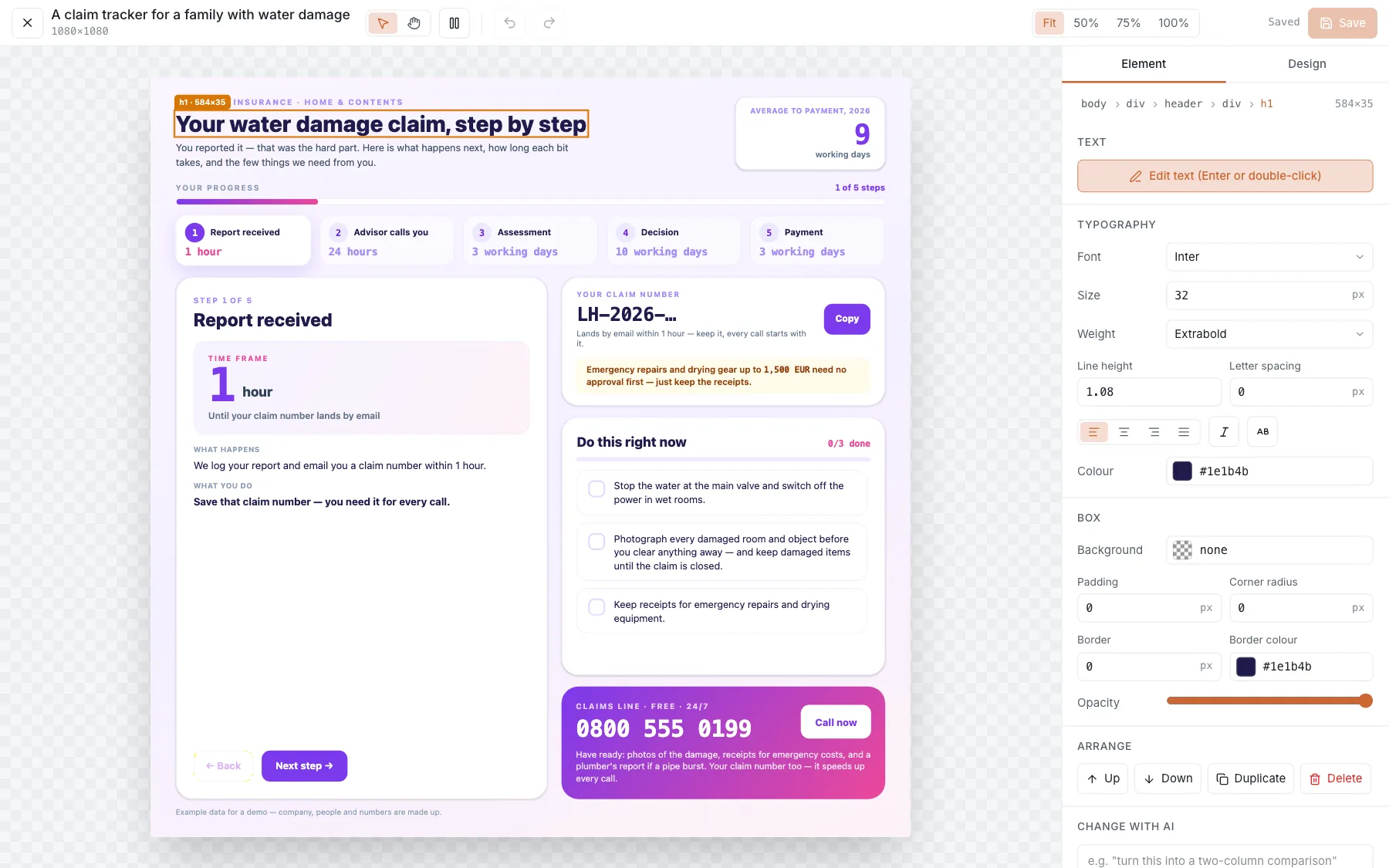
The result opens in a visual editor. Most changes take a click, so you rarely need another round with the model.
- Select and edit
Click any element to select it. Change its text in place.
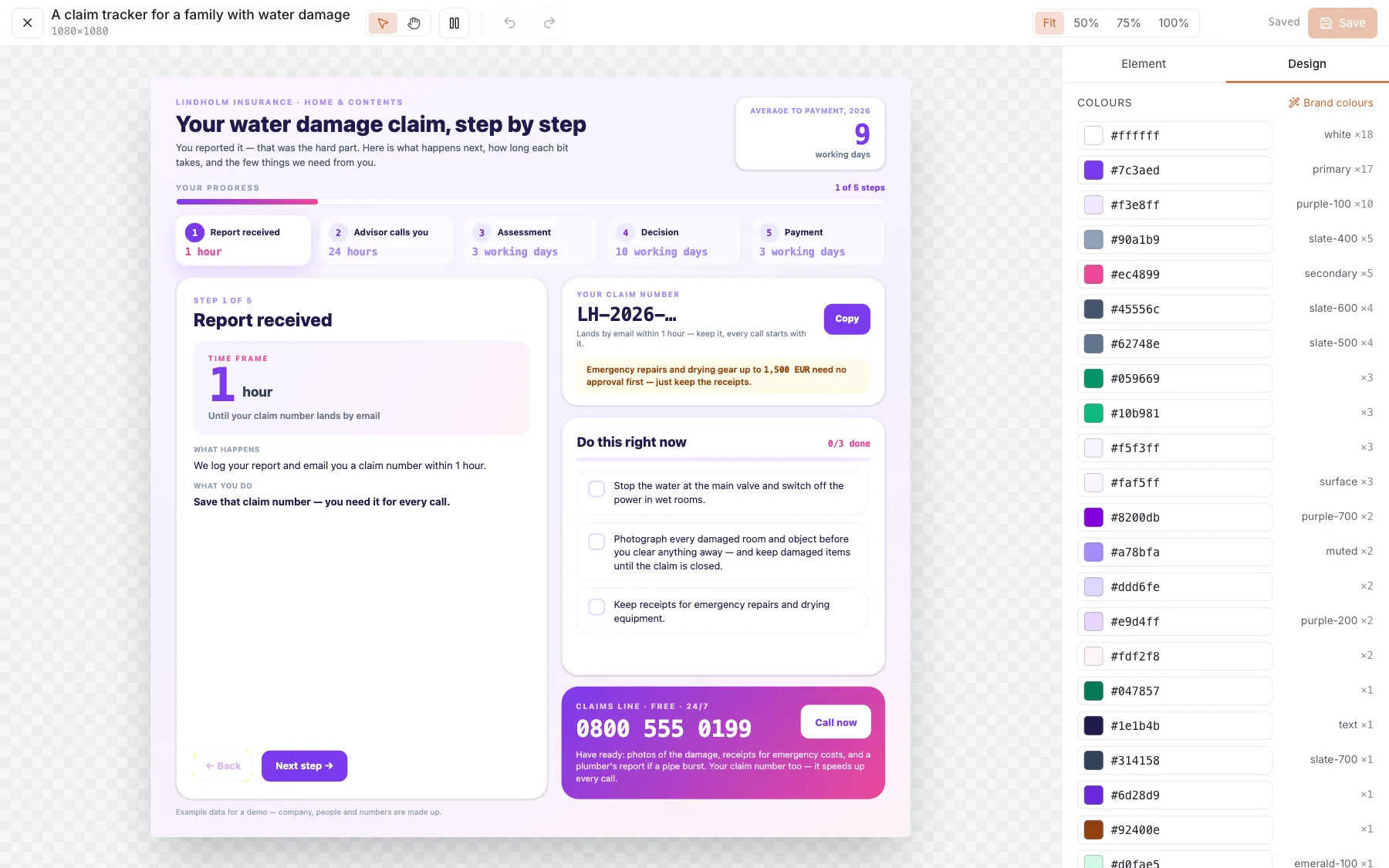
- Colours everywhere at once
A colour changes wherever it is written: CSS, SVG, script and Tailwind classes.
- Type and style
Google Fonts or system fonts, spacing, borders, and your own CSS on top.
- AI when you want it
Ask for a change to the whole widget or just the element you selected.
- Your logo, not a drawing of it
Upload it once. Forge puts your file into what you build, and the AI only decides where it goes.
- Undo and history
Undo and redo as you go. Every save is a new iteration you can go back to.
Works on its own, and better with prism0x2A.
prism0x2A reads your codebase. forge0x2B turns what it found into something a person will read.
Every format, from your documents, text, images and prompt. No scan needed.
forge0x2B reads the blueprint prism0x2A made of your code (files, dependencies, capabilities) and writes from it:
Install the Mac app or run npx forge0x2b. There is no account and no upload to us.
Calls go straight from your machine to your provider.
Generated HTML renders in a sandboxed frame with a strict content security policy.
Or use forge0x2B in your browser.
At app.forge0x2b.dev it runs without installing anything. You build and edit the same way, and your library is kept with your account, on every device. Access is by invitation for now.
The web app uses your Google account or your Microsoft work or school account only to sign you in. It receives your name, email address, account ID and whether the address is verified. It keeps no access tokens, uses none of this for advertising and passes nothing on.
What you build is stored with your account, so it is there on every device. You can export it or delete your account in the app at any time.
The web app has its own privacy policy and terms, both in German.
Start free, upgrade when you need more.
Monthly or yearly. Cancel anytime. Model costs are billed by your provider.
No credit card.
- 3 free generations
- Your API key or Claude plan
- Local-first
- Watermark on output
or €190 per year
- Unlimited generations
- No watermark
- Your API key or Claude plan
- Local-first
or €290 per year · €9 less than both apart
- forge0x2B Pro
- prism0x2A Pro
- One subscription
Frequently asked questions.
Do I need prism0x2A?
No. forge0x2B builds every format from your documents, text, images and prompt on its own. With prism0x2A it can also read the blueprint of your code and write release notes, walkthroughs and reports from it.
Do I need an API key?
Not for Build. You can run its prompt in Claude, or in any other assistant, and paste the result back. With an Anthropic key, forge0x2B sends your prompt and sources straight to the provider, so nothing passes through a server of ours. Ask and the generators that write from your code need a key.
What does a run cost?
With an API key, your provider bills the tokens of each run, and forge0x2B shows an estimate before you start one. If you run the prompt in your own assistant, it counts toward that plan.
Which languages can it write in?
German, English, French, Spanish. You pick the output language for each run. The interface is in English.
Can I change what the AI made?
Yes. In the editor you can select any element and change its text, colours and fonts by hand, or ask the AI to change just that element. Every save is a new iteration you can go back to.
Why 0x2B?
0x2B is 43, one more than prism0x2A's 42 — and yes, '2B or not 2B' is intentional. Some easter eggs write themselves.
Try it with your own material.
3 free generations, with your own API key or Claude plan.
Download for MacApple Silicon. On an Intel Mac, Windows or Linux: npx forge0x2b